Built for Impact. Built to Last.
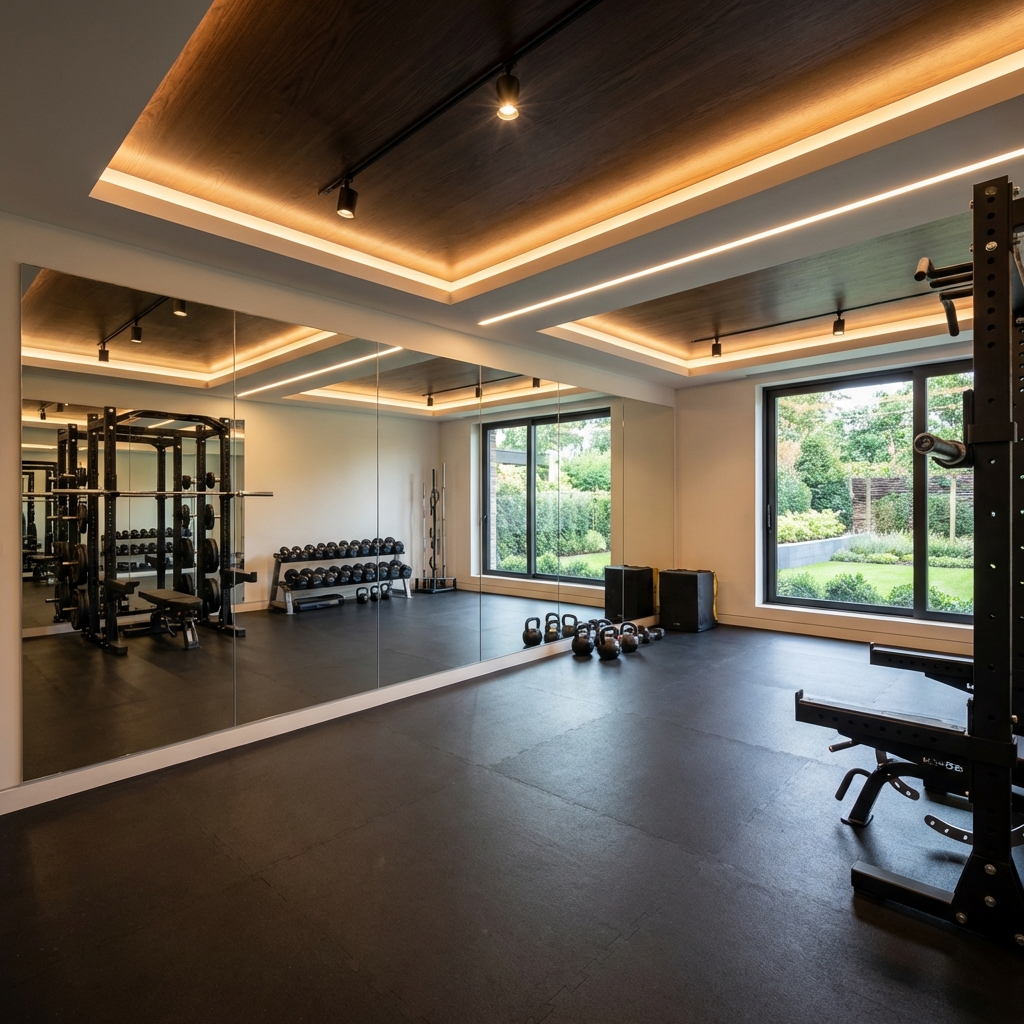
Rubber flooring is no longer just for commercial weight rooms. As home gyms, workshops, and
versatile garage spaces become standard in South Jordan homes, rubber has emerged as the premier
choice for durability and safety. It offers a unique combination of shock absorption, slip
resistance, and acoustic dampening that concrete or epoxy simply cannot match.
At South Valley Flooring, we install high-density recycled rubber surfaces that protect your
subfloor from dropping weights, heavy machinery, and extreme foot traffic. Unlike the cheap,
smelly mats you buy online that curl at the edges, our professional-grade rubber rolls and tiles
are precision-cut, fully adhered (or tight-locked), and virtually seamless.
Why Rubber is the Ultimate Utility Floor
Rubber is an elastomer, meaning it recovers its shape after compression. This property makes it
uniquely suited for:
- Home Gyms: Provides critical shock absorption for heavy deadlifts and
protects your joints during high-impact cardio. It is naturally anti-microbial and non-slip,
even when sweaty.
- Garages & Workshops: Resistant to oil, grease, and chemicals. Unlike cold
concrete, it provides insulation, making your garage workshop comfortable year-round.
Dropping a wrench on rubber is silent; dropping it on concrete is deafening.
- Playrooms: Offers a soft, safe landing spot for kids that is easy to wipe
clean and essentially indestructible.
Rolls vs. Interlocking Tiles: Which is Right for You?
We help you decide based on your specific space layout and usage:
Rubber Rolls
The seamless professional look. This is what you see in commercial Gold's Gyms or Planet Fitness
locations.
Advantages: Fewer seams mean fewer places for sweat or water to leak
through. Lower cost per square foot for large areas.
Installation: Requires precise cutting around pillars and walls. We usually
glue it down fully for a permanent install, or use double-sided tape for a semi-permanent
option.
Interlocking Tiles
Puzzle-lock squares that fit together tightly.
Advantages: Easier to replace a single damaged section—just pop it out and
put a new one in. Can be installed as a "floating" floor (no glue), making it great for rentals
or temporary setups.
Installation: Fast and clean, but requires careful alignment to look
professional. The seams are visible up close.
Choosing the Right Thickness
Don't under-spec your floor. The thickness determines the protection level:
- 1/4 Inch (6mm): Basic protection. Good for cardio areas, spin bikes, and
light dumbbell work. It prevents scratches on the subfloor but offers minimal shock
absorption.
- 3/8 Inch (8mm - 10mm): The Industry Standard. This is what we install in
90% of gyms. It is thick enough to protect concrete from dropped dumbbells and plates. It
feels solid but forgiving.
- 1/2 Inch+ (12mm+): Extreme Duty. Required for Crossfit boxes, Olympic
lifting platforms, or areas where 100lb+ weights are dropped from overhead.
The Smell Factor
One common concern is the "tire smell." Cheap rubber flooring is made using sulfur-based bonding
agents that smell like a tire fire forever. We only source low-VOC, virgin or premium
recycled rubber. While all rubber has a faint scent initially, our products are
designed for indoor air quality compliance and become odorless within a few weeks.