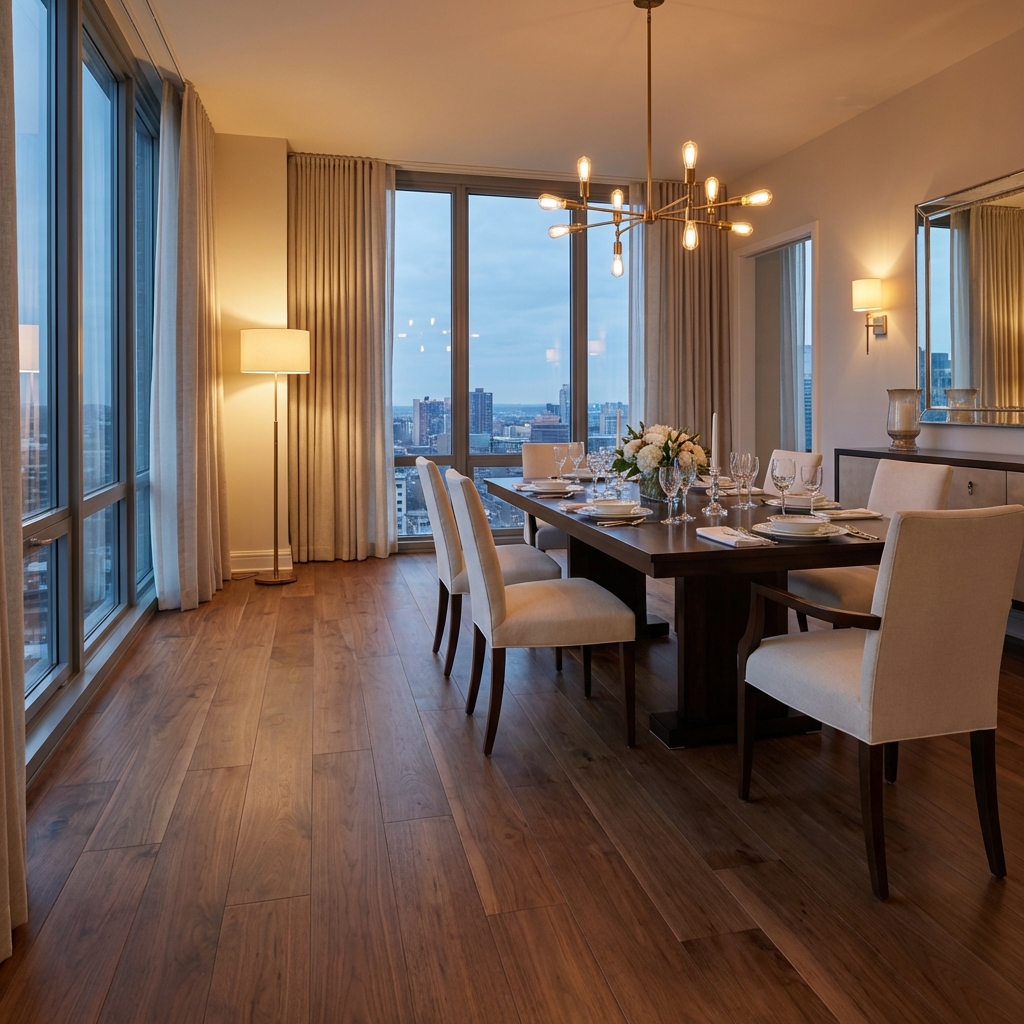
Real Wood, Reinvented for Modern Living
Engineered hardwood is not "fake" wood. It is a brilliant evolution of traditional flooring. It
consists of a top layer (wear layer) of genuine high-quality hardwood—Oak, Maple, Hickory—bonded
to a high-density multi-ply plywood core. This cross-grain construction makes it incredibly
stiff, stable, and resistant to the humidity fluctuations that plague solid wood.
For South Jordan and Draper homeowners, this is often the superior choice, especially for
basements or homes built on concrete slabs. Utah's climate is extremely dry, but our basements
can be damp or humid. Solid wood expands and contracts violently in these mixed conditions,
leading to cupping or gaps. Engineered wood stays flat, stable, and gorgeous year after year,
delivering the authentic look of wood with superior engineering under the hood.
Why Engineered Flooring is the Smart Choice for Utah
Many clients ask us, "Why not just use solid wood?" The answer lies in the structural integrity.
The core layers of engineered wood are stacked in alternating directions. This "cross-ply"
construction counteracts the natural tendency of wood to expand along the grain. This results in
distinct advantages:
- Basement Friendly: It can be safely installed below grade (in basements)
where solid wood often fails due to concrete moisture.
- Wide Plank Stability: Fashion dictates wider planks. With solid wood, a 7"
plank is risky; it will gap in winter. With engineered wood, we can install ultra-wide
planks (7" to 10" or more) without fear of massive seasonal gapping.
- Radiant Heat Compatible: If you have hydronic heated floors, engineered
hardwood is one of the few wood options that can withstand the direct heat transfer without
drying out, shrinking, and cracking.
Our Installation Methods
We don't believe in "one size fits all." Depending on your subfloor (plywood vs. concrete) and
the specific product, we use one of three expert installation methods:
1. Glue-Down Installation
The gold standard for concrete slabs. We use premium, moisture-curing urethane adhesives (like
Bostik or Sika). This creates a permanent bond, a solid feel underfoot (no hollow "clicking"
sound), and acts as an additional moisture vapor barrier. It requires significant skill to keep
the glue off the finish—a skill our installers have mastered through years of experience.
2. Nail-Down / Staple
Used over wooden subfloors. Similar to solid wood installation, this is fast and secure. We use
specialized pneumatic staplers that drive resin-coated staples into the tongue of the board.
This holds the planks firmly to the subfloor while allowing for the necessary micro-movements.
3. Floating Installation
Some modern engineered floors utilize a click-lock system or are glued at the tongue and groove
but not to the subfloor. We install these over a high-quality sound-dampening underlayment
(padding). This is an excellent choice for condos (sound reduction) or when installing over a
subfloor that cannot be glued to (like gypcrete).
The Wear Layer: What You Need to Know
Not all engineered floors are created equal. The extensive price difference you see in stores is
primarily due to the "wear layer"—the thickness of the actual hardwood veneer on top.
- Entry Level (1mm - 2mm): Good for low traffic or budget projects. It offers
the look of wood but cannot be sanded or refinished. Longevity is limited to the durability
of the finish.
- Mid-Range (3mm - 4mm): The residential sweet spot. It looks and feels
substantial. It can typically be sanded and refinished 1-2 times in its life, extending its
value.
- Premium (5mm - 6mm): This is an investment grade floor. The top layer is as
thick as a solid wood floor's usable surface. It can be refinished multiple times and will
last generations, just like solid wood.
We guide you through selecting the right grade for your lifestyle. We don't sell materials, but
we will inspect what you've chosen or recommend trusted local suppliers to ensure you aren't
buying a product that will delaminate in five years.