Custom Floating Stairs

Elevate the center of your home with modern architectural design.

Request a Consultation

More Than Details. A Masterpiece.

In modern architecture, the staircase is often the architectural focal point of the entire home. Yet, builders often treat it as an afterthought, covering cheap plywood with carpet. At South Valley Flooring, we specialize in transforming ordinary stairs into stunning floating masterpieces.

A "floating" stair system creates an open, airy feel by minimizing visible support structures. Whether utilizing a central steel mono-stringer or hidden wall brackets, the result is a clean, sophisticated look that adds immense value to your property.

Custom Hardwood Treads

The soul of a floating staircase is the tread itself. We fabricate custom treads in our local shop to match your exact specifications.

  • Thick Treads: Standard treads are 1 inch thick. Floating treads are often 3 to 4 inches thick ("Box Treads") to provide structural solidity and a substantial visual weight.
  • Color Matching: We stain the treads to perfectly match your lower and upper level hardwood floors, ensuring a seamless visual transition.
  • Material Selection: White Oak is our most popular choice for its durability and grain, but we also craft treads from Walnut, Maple, and Hickory.
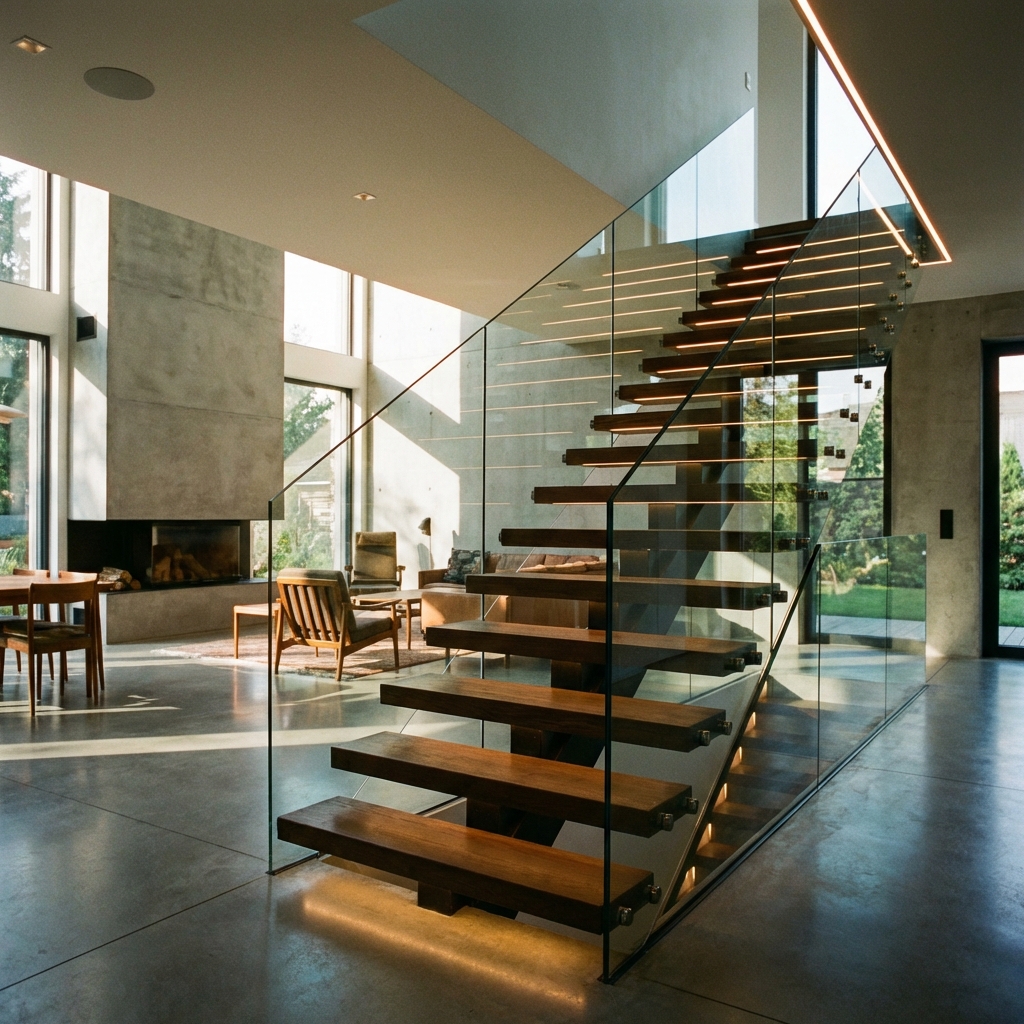
Modern floating staircase with glass railing

Waterfall Install vs. Bullnose

For carpet or runner installations on stairs, we offer two distinct styles:

Waterfall

The carpet flows over the nose of the tread and straight down the riser. This is a clean, modern look that showcases the pattern of the carpet.

Hollywood / French Cap

The carpet is tucked tightly under the nose of the tread. This creates a tailored, upholstered look that defines each step individually. It requires more labor but offers a very high-end finish.

Safety Meets Style

Floating stairs must be safe. We ensure all our installations meet Utah building codes regarding open riser gaps (usually max 4 inches) to prevent accidents while maintaining the open aesthetic. We can incorporate glass panels, cable railings, or horizontal metal bars to complete the look.

The Process: From Concept to Ascent

1. Structural Assessment

We verify the stringers can support heavy hardwood treads. Squeaky stairs are fixed at this stage by adding screws and glue to the sub-structure.

2. Fabrication

We don't buy treads off the shelf. We laminate and finish them in our shop to ensure the nose profile (square, bullnose, micro-bevel) is perfect.

3. Installation

Treads are installed using premium construction adhesive and hidden fasteners. NO visible nail holes on the top surface of the tread if possible.

4. Protection

Stairs are a high-traffic zone. We apply commercial-grade traffic finish (like Bona Traffic HD) to ensure they aren't slippery but are incredibly resistant to wear.

Frequently Asked Questions About Stairs

Common questions about floating systems and hardwood treads.

1. Are floating stairs safe?

Yes. When properly engineered, they are incredibly strong. We ensure all our floating systems meet Utah building codes. For open-riser stairs, we ensure the gap is less than 4 inches so that a small child cannot slip through.

2. Can I retrofit my existing stairs?

It depends. If you have a standard carpeted staircase, we can often "cap" it with solid hardwood treads (over the existing structure). However, converting a standard staircase to a "floating" style usually requires major structural framing changes.

3. What wood species is best for stairs?

White Oak is the industry standard because it is hard, durable, and takes stain beautifully. Hickory is also excellent due to its extreme hardness. Soft woods like Pine should be avoided as they dent easily.

4. Are hardwood stairs slippery?

They can be. However, we use finishes with "anti-slip" additives upon request. We also recommend a matte or satin finish (rather than high-gloss), which provides better traction for socks and bare feet.

5. How long does installation take?

A standard tread overlay takes 2-3 days. A full custom floating staircase fabrication and install can take 1-2 weeks. You may need to stay off the stairs for 24 hours while the finish cures.

6. What about the railing?

We work with steel fabricators and glass installers. For a modern look, we recommend horizontal cable railing or frameless glass. For a transitional look, horizontal iron bars are popular.

7. What is a "Box Tread"?

A box tread is a hollow tread made to look like a solid thick beam (usually 3 to 4 inches thick). They give the illusion of massive weight but are lighter and more stable than a solid 4-inch piece of timber.

8. Do you make matching nosing?

Yes. If you are installing LVP or Engineered wood on your upstairs landing, we custom fabricate stair nosing from that exact same material so the transition is seamless and perfectly color-matched.

9. Can you remove squeaks?

We try our hardest. Squeaks come from loose nails rubbing against wood. During the "Structural Assessment" phase, we drive screws into the stringers to tighten everything up before we install the new beautiful treads.

10. Why are stairs so expensive?

Stairs are the most labor-intensive part of flooring. Every single step must be leveled, cut to a perfect fit (often scribed to bowed walls), and finished by hand. It is intricate carpentry work, not just "flooring."