The Future of Flooring is Waterproof
Luxury Vinyl Plank (LVP) has revolutionized the flooring industry. Gone are the days of cheap,
peeling "linoleum." Modern LVP is a high-tech, engineered product that combines the stunning
visuals of real hardwood or stone with indestructible durability. It is the fastest-growing
flooring segment in the world for a reason: it solves real-life problems.
For active families in South Jordan and Draper, LVP is the "silver bullet" of flooring. Do you
have big dogs with claws? Kids who spill juice? A pool in the backyard? LVP handles it all.
Unlike hardwood, it doesn't scratch easily. Unlike laminate, it doesn't swell when wet. And with
high-definition digital printing, it looks so realistic that most guests have to touch it to
believe it isn't wood.
Why LVP is the Ultimate Utah Floor
Utah's climate is harsh, and our lifestyle is active. LVP is uniquely suited to our environment:
- 100% Waterproof: This is not a marketing gimmick. You can flood LVP, dry it
off, and re-install it. It is perfect for mudrooms, kitchens, bathrooms, and basements where
water is a constant threat.
- Thermal Stability: Rigid Core (SPC) vinyl does not expand and contract like
wood. This means we can install it in sunrooms or cabins with large temperature swings
without fear of buckling.
- Pet Proof: It provides traction for paws and is impervious to accidents. If
a pet makes a mess, it wipes up without staining or retaining odors.
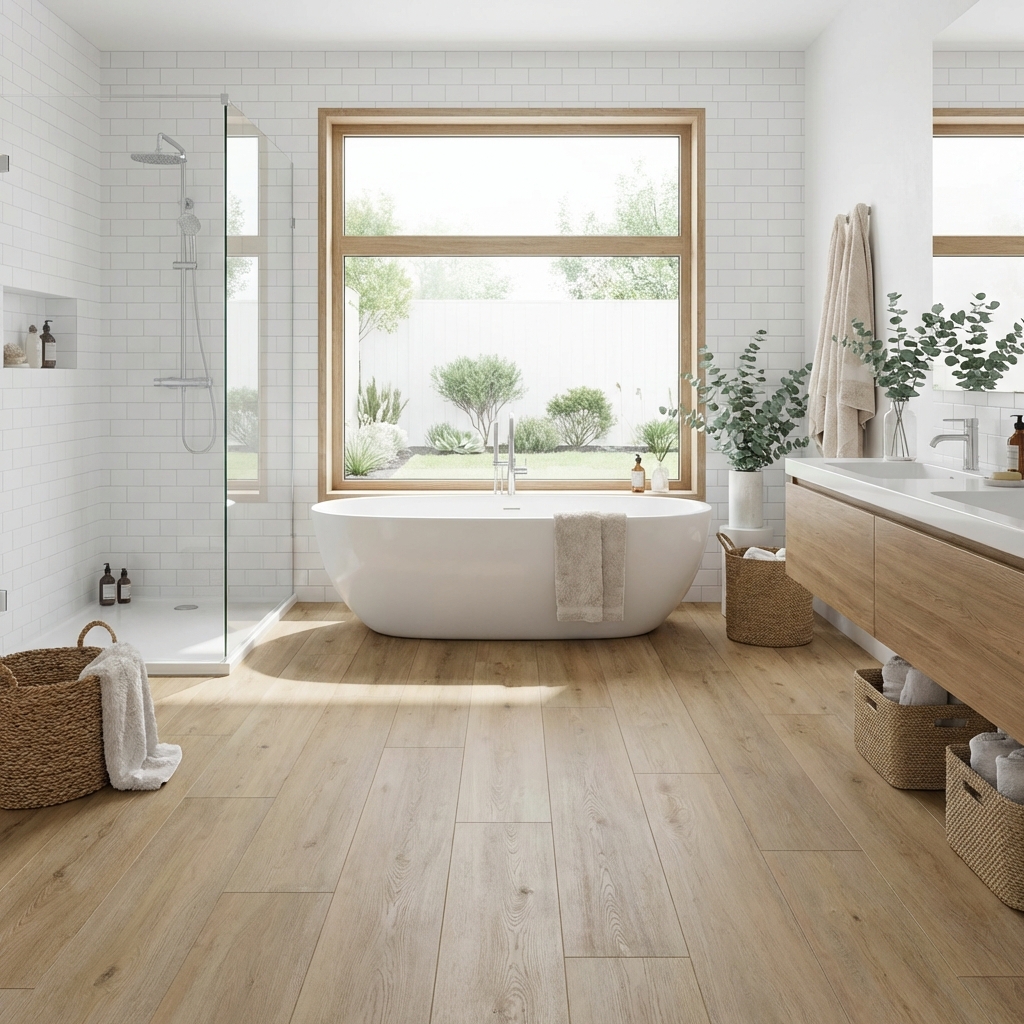
Understanding the Core: SPC vs. WPC
Not all vinyl is created equal. The performance of your floor depends entirely on the core
technology. We help you choose the right one:
Stone Polymer Composite (SPC)
Also known as "Rigid Core." The core is made of limestone powder and stabilizers. It is
incredibly dense, heavy, and hard.
Pros: Indestructible, virtually dent-proof (drop a can of soup, it won't
dent), withstands heavy furniture.
Cons: Harder underfoot, slightly colder.
Best For: Commercial spaces, kitchens, main levels with heavy traffic.
Wood Polymer Composite (WPC)
The core contains foaming agents and wood flour.
Pros: Softer, warmer, and quieter underfoot. It feels more like real wood
when walking on it.
Cons: Can dent if a heavy object is dropped.
Best For: Second-floor bedrooms, playrooms, basements seeking warmth.
The Wear Layer: Your Shield
The durability of vinyl is measured in "mils" (thousandths of an inch). This clear protective
coating sits on top of the print film.
- 12 mil: Residential standard. Good for bedrooms and low-traffic areas.
15-year warranty typically.
- 20 mil: The "Sweet Spot" for active homes. Rated for light commercial use.
Perfect for hallways, kitchens, and living rooms. This is what we recommend for 90% of our
clients.
- 30+ mil: Heavy Commercial. Used in hospitals and airports. Overkill for a
home, but available if you want the ultimate armor.
Our Installation Process
LVP is often sold as a "click-it-and-forget-it" product, but professional installation matters.
Here is how we do it differently:
- Laser Leveling: LVP is thinner than wood. It telegraphs subfloor
imperfections. We grind high spots and fill low spots to a tolerance of 3/16" over 10 feet.
If we skip this, your locking mechanisms will break in 6 months.
- Undercutting Jambs: We saw the bottom of door jambs and casings so the
flooring slides underneath for a clean, custom look. Amateurs cut around
the jamb and fill the gap with ugly caulk.
- Random Stagger: We open 4-5 boxes at a time and work from all of them to
mix the pattern repeats. We carefully stagger end joints to avoid "H-joints" or "step
patterns," ensuring a natural flow.
- Baseboards & Trim: We remove your existing baseboards (or install new
modern ones) rather than using Quarter Round (shoe molding) everywhere. This results in a
cleaner, higher-end finish.