Masterful Hardwood Flooring Installation

Timeless elegance, unmatched durability, and precision craftsmanship for your Utah home.

Request a Quote

The Unrivaled Beauty & Value of Real Hardwood

There is simply no substitute for the warmth, character, and enduring value of genuine hardwood flooring. At South Valley Flooring, we view hardwood installation as an artisan craft, not just a trade. The decision to install hardwood is one of the most significant investments you can make in your home, often yielding a return on investment (ROI) of 70-80% upon resale. But beyond the numbers, it transforms the feeling of your home, grounding your space in natural beauty that synthetic alternatives simply cannot replicate.

For homeowners in South Jordan, Draper, and the greater Salt Lake Valley, hardwood flooring is particularly desirable. Our distinct four seasons—dry winters and hot summers—demand a flooring solution that is stable, durable, and capable of adapting to our climate. Unlike carpet which traps allergens, or laminates that can peel, solid hardwood adds structural integrity to your home. Whether you desire the rustic, knotty charm of wide-plank Hickory to complement a mountain-modern aesthetic, the sophisticated, clean grain of Rift & Quartered White Oak for a contemporary look, or the rich, deep tones of exotic Brazilian Cherry, our certified installation team has the training and expertise to bring your vision to life.

Why Professional Installation Matters (Especially in Utah)

Hardwood is a living, breathing material. It is hygroscopic, meaning it absorbs and releases moisture from the air. In Utah's high-desert climate, this characteristic is critical. An improper installation that doesn't account for our extremely dry winters and potential humidity swings can lead to catastrophic failure: cupping (edges rising), crowning (center rising), or unsightly gapping.

Top-tier installation is about science as much as aesthetics. We strictly adhere to NWFA (National Wood Flooring Association) guidelines to ensure your floor lasts a lifetime:

  • Scientific Acclimatization: We don't just drop off the wood and wait 2 days. We measure the moisture content of the wood and your subfloor using professional hygrometers. Installation only begins when the wood has reached equilibrium with your home's environment, ensuring stability.
  • Subfloor Archaeology: The quality of the floor above is determined by the quality of what's below. We grind down high spots to within 3/16" over 10 feet and fill low spots with self-leveling compounds. We also re-screw subfloors to silence annoying squeaks before they become permanent.
  • Artistic Racking: We don't just pull planks from the box. We "rack" the floor, laying out loose planks to visualize the grain flow. We painstakingly mix bundles to disperse color variations and ensure that knots or defects are distributed naturally, avoiding the "checkerboard" or "stair-step" look of amateur installs.

Exploring Hardwood Styles & Species
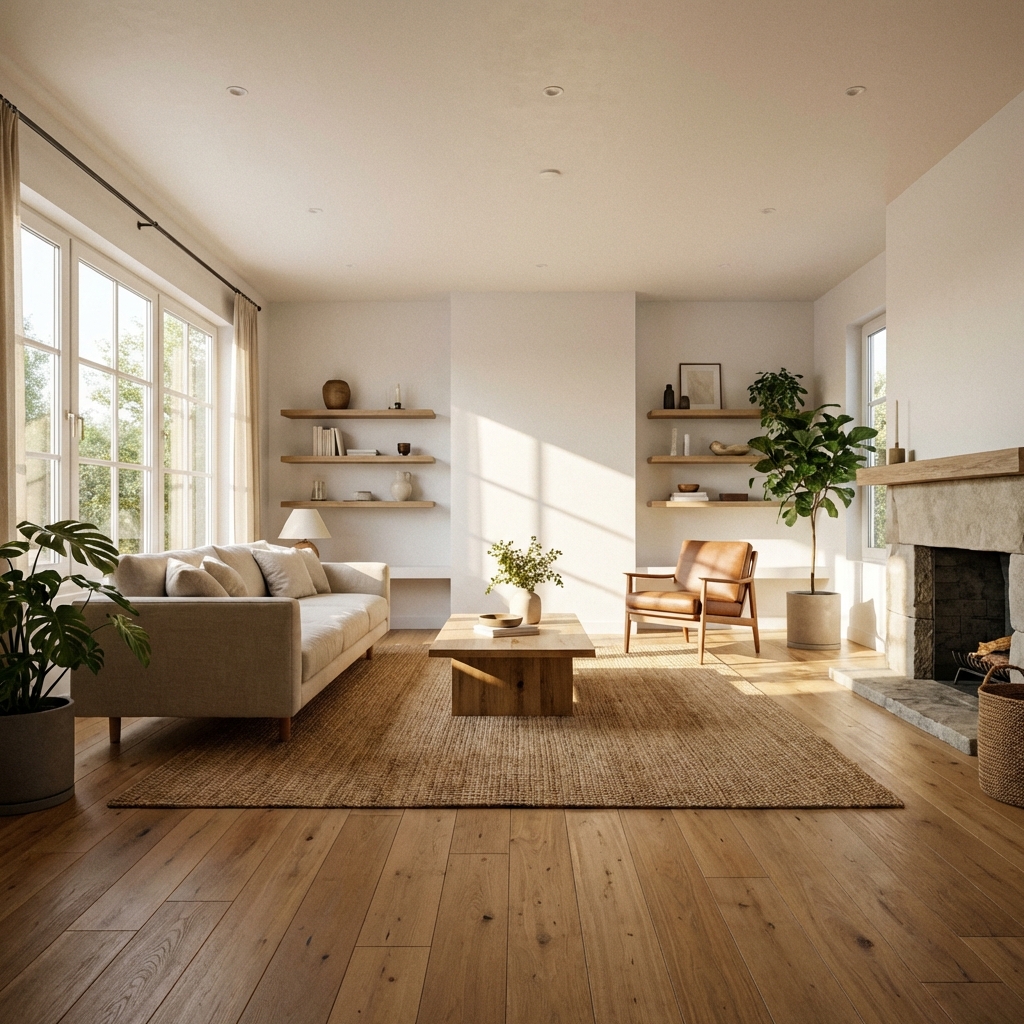
Modern living room with oak hardwood floors

Solid Hardwood vs. Engineered

Solid Hardwood is milled from a single piece of timber. It is the gold standard for longevity, as it can be sanded and refinished 5-7 times, effectively lasting 100+ years. It provides a solid, dense feel underfoot. It is best suited for above-grade rooms (living rooms, bedrooms, kitchens).

Engineered Hardwood consists of a top layer of real hardwood bonded to a cross-ply plywood core. This construction makes it incredibly stable and resistant to expansion/contraction. It is the ideal choice for basements, over radiant heating systems, or on concrete slabs where solid wood might be risky.

Popular Species in Utah

White Oak: currently the most popular choice. Its neutral wheat tones take stain beautifully, from "invisible" matte water-based finishes to deep espresso tones. It is harder than Red Oak and has a smoother grain.

Hickory: The hardest domestic wood (Janka rating 1820). It features dramatic color variation between the heartwood (dark) and sapwood (blonde), making it perfect for rustic or high-traffic homes.

Walnut: Prized for its rich, chocolate tones and luxurious grain. It is softer than oak, so it requires care, but its beauty is unmatched for formal dining rooms or libraries.

Finishes & Textures

We specialize in custom site-finished floors, giving you control over the final look:

  • Hand-Scraped / Wire-Brushed: Adds texture that hides scratches and dust, perfect for active families with dogs.
  • Matte / Satin Finishes: We recommend low-sheen finishes. They look more modern and hide dust/footprints far better than high-gloss piano finishes.
  • Custom Stains: We can mix custom colors right on your floor for you to approve, ensuring the tone matches your cabinets and paint perfectly.

Our detailed Process

We believe in transparency. A great floor is 90% preparation and 10% installation. Here is exactly what you can expect when you choose South Valley Flooring for your hardwood project.

1. In-Home Consultation

We perform a detailed on-site survey. We check moisture levels in the slab or subfloor using non-invasive meters, measure square footage accurately to minimize waste (saving you money), and discuss critical details like transition heights to tile/carpet and door clearance.

2. Delivery & Acclimation

This steps cannot be rushed. Wood is delivered to your home days (or weeks, depending on species width) before installation. We stick-stack the wood if necessary to ensure air flow. We monitor the RH (Relative Humidity) of your home to ensure it matches the wood's moisture content.

3. Subfloor Engineering

We remove old flooring and rigorously prep the subfloor. Panels are re-screwed to joists. High spots are sanded. Low spots are filled. If installing over concrete, we use premium moisture barriers or roll-on membranes to prevent hydrostatic pressure from ruining your investment.

4. Precision Installation

We use pneumatic cleat nailers for solid wood (cleats hold better than staples) or premium urethane adhesives for glue-down. We leave precise expansion gaps around the perimeter (hidden by baseboards) to allow the floor to expand and contract with the seasons safely.

5. Sand & Finish (For Site-Finished)

For unfinished wood, the magic happens now. We use a multi-grit sanding process to flatten the floor perfectly. We water-pop the grain to accept stain deeply and evenly. Finally, we apply 3 coats of commercial-grade waterborne (Bona Traffic HD) or oil-modified polyurethane.

6. Final Walkthrough

We install shoe molding or baseboards to cover expansion gaps. We vacuum and clean the entire area. Finally, we walk the floor with you to ensure every plank meets your expectations and provide a care guide for maintenance.

Frequently Asked Questions About Hardwood

Common questions from our South Jordan and Salt Lake clients.

1. Why does my subfloor need to be leveled?

Hardwood is rigid. If the subfloor has dips or humps, the wood will "bridge" over them. Over time, walking on this hollow spot causes the board to flex, leading to squeaks, cracks in the finish, or even broken tongue-and-floove joints. A flat subfloor is non-negotiable for a floor that feels solid and lasts.

2. Can I install hardwood in a kitchen?

Yes. It is a classic choice. While wood hates standing water (like a dishwasher leak), normal splashes are fine if wiped up. We recommend site-finished floors for kitchens because the polyurethane seals the seams between boards, preventing water from seeping down into the cracks.

3. What is the Janka Hardness Scale?

The Janka scale measures a wood's resistance to denting. Red Oak (1290) is the industry standard. Hickory (1820) and Maple (1450) are harder/more durable. American Walnut (1010) is softer and will dent easier. If you have large dogs, we recommend Hickory or White Oak.

4. How long does the acclimation process take?

There is no set time (e.g., "3 days"). It takes as long as it takes for the wood's moisture content to come within 2-4% of the subfloor. In dry Utah winters, this might happen quickly; in wet springs, it takes longer. We test with meters, not calendars.

5. Can you refinish my existing hardwood floors?

Yes, provided they are solid wood or engineered wood with a thick enough "wear layer" (at least 3mm). We sand off the old finish, repair scratches/dents, and can even change the stain color to completely modernize the look of your home.

6. What about scratches from dogs?

All wood can scratch. To minimize this, choose a harder species like Hickory or White Oak. Also, opt for a "wire-brushed" texture and a matte finish, which hide scratches much better than smooth, glossy floors. Keeping dog nails trimmed is the best prevention.

7. Oil vs. Water-Based Polyurethane?

Oil-based is traditional, turns amber/yellow over time, smells strong during application, and takes longer to dry. Water-based (like Bona Traffic) is clear (doesn't yellow), dries in hours, has low VOCs, and is actually harder/more durable in its commercial-grade versions. We recommend Water-based for 90% of homes.

8. How do I clean my new hardwood floors?

Less is more. Use a microfiber dust mop daily. For cleaning, use a dedicated hardwood cleaner (like Bona) and a misting mop. NEVER use steam mops (injects moisture), Murphy's Oil Soap (leaves residue), or vinegar (acid attacks the finish).

9. Can you install over radiant heat?

Yes, but we typically recommend Engineered Hardwood for this application. Engineered wood is more dimensionally stable and handles the direct heat without drying out and shrinking as much as solid wood would.

10. Do you offer a warranty?

Yes. We provide a 1-year installation warranty on workmanship. This covers any issues related to installation like loose boards or squeaks. The material itself comes with a manufacturer warranty (often 25-50 years) which we help you register.